ABOUT COREY
Comfortable in research labs and mountain monasteries, Corey's work bridges contemplative practice and modern psychology. His PhD research explored the specific mechanisms by which mindfulness reduces anxiety and depression — particularly the patterns of rumination and emotional reactivity that keep people stuck under pressure.
Comfortable in research labs and mountain monasteries, Corey's work bridges contemplative practice and modern psychology. His PhD research explored the specific mechanisms by which mindfulness reduces anxiety and depression — particularly the patterns of rumination and emotional reactivity that keep people stuck under pressure.
He started as a jazz musician in Toronto. Looking for a competitive edge, he began meditating at the Toronto Zen Centre in 1995 — his pitch to friends at the time: "Forget all the Buddhist stuff, these people know how to concentrate." What followed was fifteen years studying Tibetan Buddhist philosophy in India, translating for teachers at Chenrezig Institute, and gradually becoming convinced that the tools he was learning belonged in more hands than they were reaching.
Back in Australia, he completed degrees in Psychology and Sanskrit at the University of Sydney and became one of Australia's lead trainers of Cultivating Emotional Balance — a program developed through collaboration between Tibetan Buddhist scholars and emotion scientists including Paul Ekman and B. Alan Wallace. He then completed a PhD at the University of the Sunshine Coast researching the specific mechanisms by which mindfulness training reduces anxiety and depression. That research was published in the European Journal of Investigation in Health, Psychology and Education in 2025.
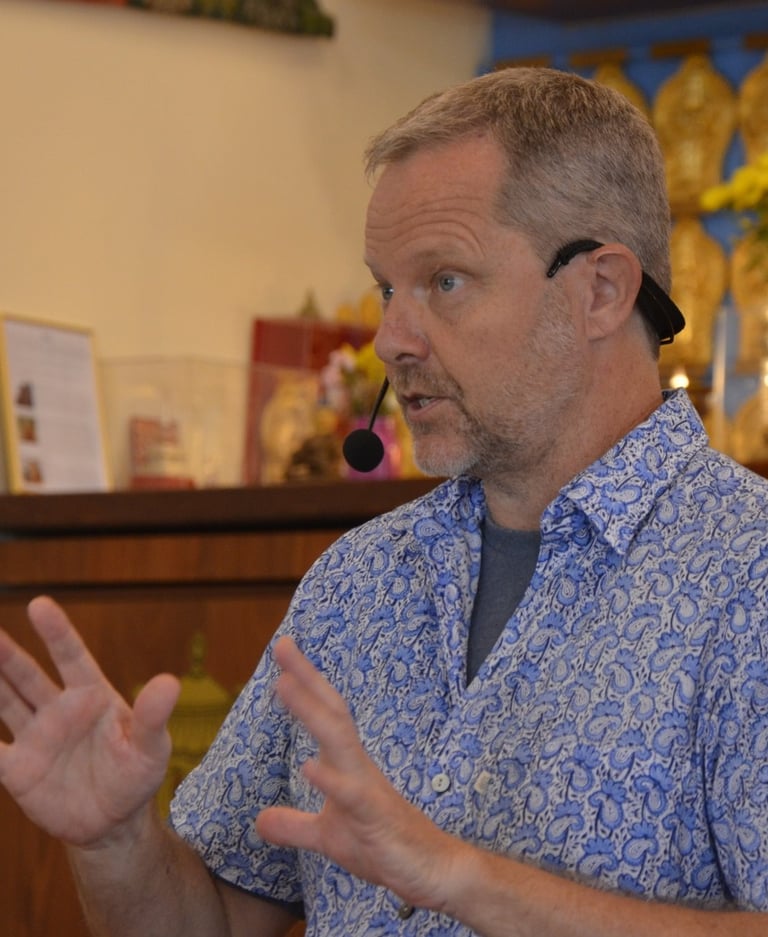
He has delivered workshops with palliative care staff at Hummingbird House Children's Hospice, with paramedic and clinical training cohorts at the University of the Sunshine Coast, and with individuals and organisations across Australia.
The throughline from jazz musician to contemplative researcher: attention — what it does, how to train it, and what becomes possible when you can.